UAE Bank Transfer Failed or Pending? Reasons, Solutions and What to Do
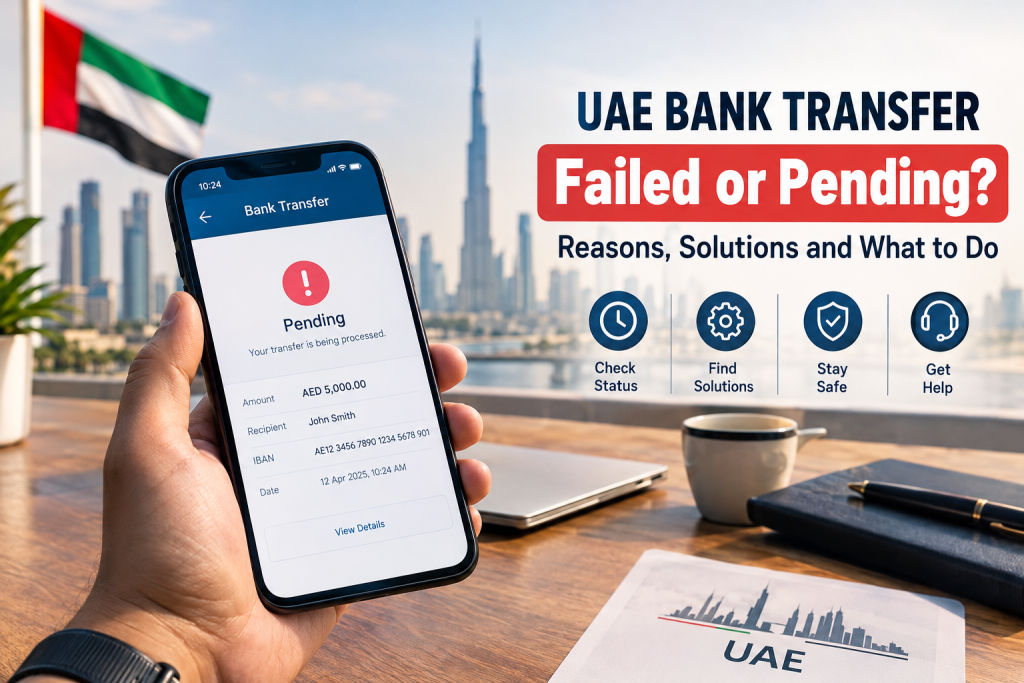
Sending money through a banking app is usually quick and convenient, but problems can occur when a transaction remains pending, fails unexpectedly or the amount is deducted without reaching the recipient. If you are facing a UAE bank transfer pending issue, the first step is to check the transaction status and understand what may have caused the delay.
A delayed transfer does not automatically mean your money is lost. The transaction may still be processing, undergoing security checks or waiting for the receiving bank to complete its part of the process.
In this guide, you will learn why a UAE bank transfer may fail or remain pending, what to do when money is deducted but not received, how to check a transaction and where to complain if your bank does not resolve the issue.
Why Is My UAE Bank Transfer Pending?
A bank transfer can remain pending for several reasons. The exact cause depends on the bank, payment method, destination and transaction status.
1. Bank Processing Delays
Some transfers are processed almost immediately, while others require additional processing time. Transfers made outside banking hours, on weekends or during public holidays may take longer, depending on the payment service.
International transfers may also involve intermediary banks and additional verification.
What to do: Open your banking app, review the transaction details and check the estimated processing time provided by your bank.
2. Incorrect Beneficiary Details
An incorrect account number, IBAN or beneficiary name can cause a transfer to be rejected, delayed or returned.
Before sending money, carefully check the recipient’s banking details. If you discover a mistake after submitting the transaction, contact your bank immediately rather than sending another payment.
3. Security or Compliance Checks
Banks may review transactions when additional verification is necessary. These checks can involve unusual activity, incomplete information or regulatory requirements.
What to do: Check your registered email address, SMS messages and banking app notifications. If the bank requests additional information, respond through its official channels.
4. Technical Problems With the Banking App
Temporary technical issues, maintenance or payment-network interruptions can affect transaction status updates.
Your app might show a pending transaction even when the payment process is still being completed.
What to do: Check the bank’s official service announcements and review the transaction history. Avoid repeatedly submitting the same transfer.
5. Receiving Bank or Intermediary Delays
For transfers between different banks, the receiving institution may need additional time to process the incoming payment. International payments can take longer because of currency conversion, intermediary banks and destination-country requirements.
What to do: Ask your bank whether the transfer has been sent, is awaiting processing or has been returned. Request a transaction reference if the payment has left your account.
Money Deducted but Not Received in the UAE: What Should You Do?
One of the most concerning banking problems occurs when money leaves your account but the recipient cannot see it.
If this happens, follow these steps in order.
Step 1: Check Your Transaction Status
Log in to your bank’s official mobile app or online banking service.
Look for the transaction under recent activity or transfer history. Its status may be pending, processing, successful, failed or reversed, depending on the bank’s terminology.
Save a screenshot of the transaction details for your records, taking care not to share sensitive account information publicly.
Step 2: Check the Recipient’s Account
Ask the recipient to review their account activity and confirm the correct account was provided.
Sometimes an incoming payment appears later than the sender expects. Confirm the recipient’s details before taking further action.
Step 3: Save the Transaction Reference
Keep the following information ready:
- Transaction date and approximate time
- Transfer amount and currency
- Transaction reference number
- Beneficiary details, shared only through secure channels
- Screenshots or confirmation receipts
These details help the bank investigate the payment more efficiently.
Step 4: Contact Your Bank
If the payment remains pending beyond the bank’s stated processing time, or the transaction is marked successful but the recipient has not received the money, contact your bank’s official customer support team.
Explain that the amount has been deducted but the beneficiary has not received it. Ask the bank to trace the transaction and confirm its current status.
Request a complaint or service reference number if an investigation is opened.
Step 5: Avoid Sending the Same Payment Again
Do not repeat the transfer until you have confirmed what happened to the original transaction. Otherwise, you could accidentally pay twice.
If the payment is urgent, ask your bank to clarify whether the original transaction is still active or has been cancelled or returned.
How Long Does a UAE Bank Transfer Take?
There is no single processing time for every UAE bank transfer. The time depends on the payment channel, destination, currency, transaction checks and receiving institution.
| Transfer type | What to expect |
|---|---|
| Domestic instant transfer | May arrive within seconds or minutes when the service and transaction are eligible |
| Other domestic transfers | May take longer depending on the payment channel and bank processing |
| International transfer | May require additional business days, depending on the destination and intermediary banks |
| Rejected or returned transfer | Timing depends on the reason for rejection and the return process |
These are general expectations, not guaranteed deadlines. Your bank’s transaction confirmation and published transfer terms are the best sources for the applicable timeframe.
If a bank transfer remains pending beyond the expected time, ask the bank whether it is still processing, under review or being returned.
What Happens if You Enter the Wrong IBAN?
An incorrect IBAN can create problems, but the outcome depends on whether the transfer has been processed and whether the account details correspond to a valid account.
If you notice the mistake before confirming the transfer, correct the information before proceeding.
If the transfer has already been submitted:
- Contact your bank immediately.
- Provide the transaction reference and explain the error.
- Ask whether the payment can be stopped, recalled or traced.
- Follow the bank’s instructions and retain all communication.
A transfer recall is not guaranteed, particularly if the payment has already reached another account. Do not assume that a transaction will automatically reverse just because the beneficiary details were incorrect.
How to Report a Failed Bank Transfer in the UAE
If your bank cannot resolve the problem through its normal customer support process, you can submit a formal complaint.
1. Submit a Complaint to Your Bank
Use the bank’s official complaint channel, such as its secure online portal, designated email address or branch.
Explain what happened, include the transaction reference and state the resolution you are requesting. Keep a copy of your complaint and its submission date.
The UAE Central Bank’s Consumer Protection Standards establish requirements for financial institutions’ complaint-handling processes, including acknowledgement and written responses. See the official Consumer Protection Standards.
2. Follow Up on the Complaint
Keep the complaint reference number and any written response. If the bank needs additional information, provide it through a secure channel.
Ask for a clear explanation of the transaction’s status and any expected next steps.
3. Escalate to Sanadak if Eligible
Sanadak is the UAE’s independent financial and insurance ombudsman unit, established by the Central Bank of the UAE.
If your complaint meets the eligibility criteria, you may be able to escalate an unresolved issue through the official Sanadak complaint eligibility page.
Generally, you must first submit an official complaint to the relevant bank and allow 15 calendar days to pass without receiving a written response, or receive a response you are dissatisfied with. Other eligibility and rejection criteria also apply.
Sanadak reviews eligible complaints; submitting one does not guarantee a particular outcome.
How to Prevent UAE Bank Transfer Problems
A few simple checks can help reduce the risk of delays and mistakes.
- Verify the beneficiary’s IBAN and account details before confirming payment.
- Check the transfer amount, currency and applicable fees.
- Use the official banking app or website.
- Keep transaction receipts and reference numbers.
- Check processing times before sending urgent payments.
- Respond promptly to legitimate verification requests from your bank.
- Never share your banking password, PIN or one-time verification code with anyone claiming to help with a transfer.
If you suspect an unauthorised transaction, contact your bank immediately through its official fraud-reporting channel.
Frequently Asked Questions
Why is my UAE bank transfer pending?
A transfer may be pending because of processing delays, incorrect beneficiary details, security checks, technical problems or delays at the receiving bank. Check your transaction status and contact your bank if it exceeds the stated processing time.
What should I do if money is deducted but not received?
Check the transaction history, save the reference number, confirm the recipient’s details and ask your bank to trace the payment. Avoid making a duplicate transfer until the original transaction’s status is clear.
Can I cancel a pending bank transfer in the UAE?
Cancellation depends on the bank, transfer type and transaction status. Contact your bank as soon as possible. A payment that has already been processed may not be cancellable.
Will a failed bank transfer automatically refund my money?
Not every transaction follows the same process. A rejected or returned transfer may be credited back after processing, while other cases require investigation. Ask your bank to confirm the status and expected resolution time.
Can I complain to the UAE Central Bank about a failed transfer?
Start by submitting an official complaint to your bank. If the matter remains unresolved, you may be eligible to escalate it to Sanadak, subject to its current eligibility criteria.
Is a pending international transfer normal?
Some international transfers take longer because of intermediary banks, currency conversion, compliance checks and destination-country processing. Contact your bank if the payment exceeds its stated timeframe or requires investigation.
Final Thoughts
A failed or delayed payment can be stressful, particularly when you need the money to reach someone urgently. However, a pending status does not necessarily mean the funds are lost.
If you experience a UAE bank transfer pending issue, first check the transaction details, keep your payment reference and contact your bank for an update. If the matter is not resolved, use the bank’s formal complaint process and consider escalating it to Sanadak if you meet the eligibility requirements.
Always rely on your bank and official UAE financial authorities for transaction-specific instructions. Processing times and outcomes depend on the circumstances of each payment.
Disclaimer: This article provides general educational information, not legal or financial advice. Bank procedures and transfer timelines may vary. Confirm your specific transaction status directly with your bank.