
Hospital Furniture UAE: 7 Essential Types for Hospitals and Clinics
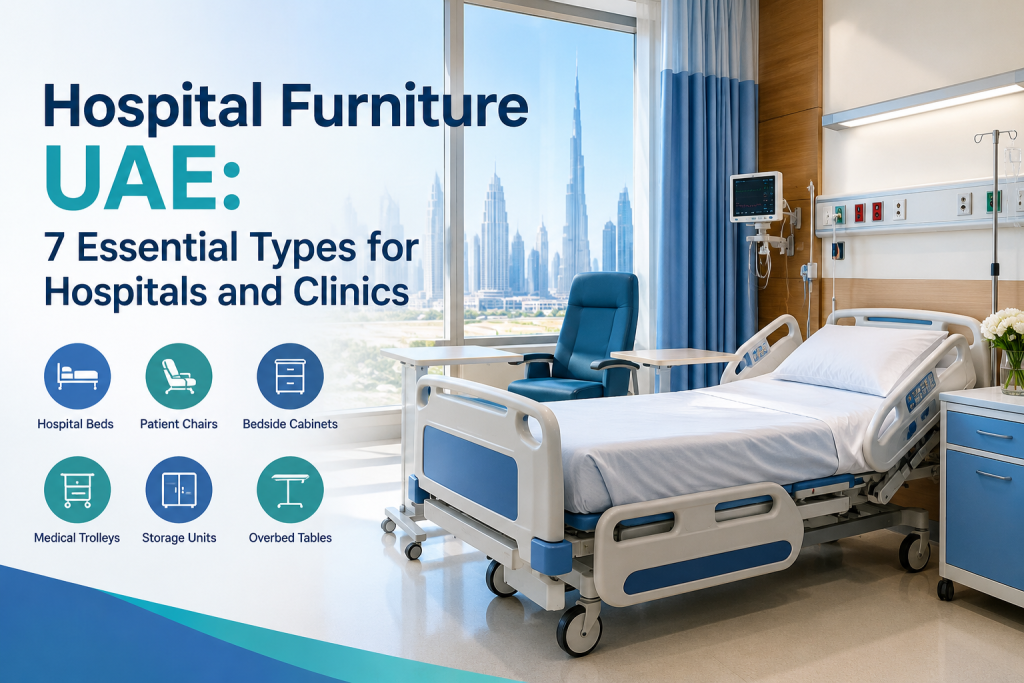
Healthcare facilities need reliable, durable and functional furniture to support patient comfort, staff efficiency and daily clinical operations. Choosing the right hospital furniture in the UAE is important for hospitals, medical centres, clinics, laboratories and other healthcare environments.
From patient beds and examination couches to medical trolleys and storage cabinets, each item serves a specific purpose. Healthcare providers should consider product quality, ease of cleaning, durability, safety and suitability for the intended clinical setting before purchasing medical furniture.
This guide explains the essential types of hospital furniture, what to consider when selecting products, and how healthcare facilities can identify suitable suppliers in the UAE.
Why Is Quality Hospital Furniture Important?
Hospital furniture supports everyday healthcare activities, including patient examinations, treatment, recovery and medical staff workflows. Poorly selected furniture may create maintenance problems, reduce comfort or make routine cleaning more difficult.
Quality furniture can help healthcare facilities:
- Improve patient comfort during examinations and treatment.
- Support healthcare professionals during routine procedures.
- Maintain organised treatment rooms and wards.
- Make cleaning and maintenance more manageable.
- Use available clinical space more efficiently.
When selecting furniture, healthcare providers should assess their specific requirements rather than choosing products based on price alone.
7 Essential Types of Hospital Furniture in the UAE
Different healthcare departments require different furniture. The following categories are commonly considered when equipping hospitals, clinics and medical centres.
1. Hospital Beds
Hospital beds are essential for inpatient wards, recovery rooms and other patient-care areas. Depending on the intended use, facilities may require manual or electrically adjustable beds with suitable side rails, locking wheels and mattress support.
What to consider when buying hospital beds:
- Patient weight capacity and intended use.
- Adjustable positioning requirements.
- Side rails and other appropriate safety features.
- Ease of cleaning and routine maintenance.
- Availability of compatible mattresses and replacement parts.
Healthcare facilities should verify product specifications and applicable safety requirements before purchasing hospital beds.
2. Examination Couches and Medical Examination Tables
Examination couches are commonly used in general practice clinics, consultation rooms and specialist medical departments. They provide a designated surface for patient examinations and routine assessments.
Depending on the clinical setting, buyers may consider fixed-height, adjustable-height or specialised examination tables.
Important features include:
- Stable construction and suitable weight capacity.
- Comfortable, cleanable upholstery.
- Easy access for patients.
- Adjustable positioning where required.
- Compatibility with the intended examination procedures.
Clinics should select examination furniture according to the types of consultations and procedures they perform.
3. Medical Trolleys
Medical trolleys help healthcare professionals move supplies, instruments and other essential items between treatment areas. Different trolley designs serve different purposes, so the intended workflow should guide the selection.
Common considerations include:
- Smooth-rolling wheels and reliable brakes.
- Suitable shelves, drawers or compartments.
- Durable materials and cleanable surfaces.
- Appropriate dimensions for corridors and treatment rooms.
- Product suitability for the intended clinical use.
Before purchasing, check whether the trolley’s design and materials meet the requirements of the department where it will be used.
4. Hospital Bedside Cabinets
Bedside cabinets help keep personal belongings and frequently used items organised near patients. They are often placed alongside beds in inpatient wards and recovery areas.
When selecting bedside cabinets, consider storage capacity, stability, ease of cleaning and compatibility with the available space. Healthcare facilities should also assess whether the cabinet design supports the needs of patients and staff.
5. Medical Stools and Examination Chairs
Medical stools and examination chairs support healthcare professionals during consultations, assessments and procedures. Depending on the application, products may feature adjustable height, back support, padded seats or mobile bases.
Buyers should consider ergonomic requirements, stability, ease of adjustment and the suitability of the chair for the intended clinical environment.
6. Hospital Storage Cabinets and Shelving
Storage cabinets and shelving help healthcare facilities organise medical supplies, equipment and other items. A well-planned storage system can improve accessibility and reduce unnecessary clutter.
Before choosing storage furniture, assess the size of the room, the items being stored, cleaning requirements and whether secure or specialised storage is necessary. Medicines and regulated supplies may require storage systems that meet separate applicable requirements.
7. Treatment Room and Specialised Medical Furniture
Treatment rooms may require additional furniture depending on the services offered. This can include procedure tables, instrument stands, specialised chairs and other purpose-built clinical equipment.
Healthcare providers should confirm that each product is suitable for the intended procedure, compatible with existing equipment and supported by appropriate product documentation.
How to Choose Hospital Furniture Suppliers in the UAE
Finding suitable hospital furniture suppliers in the UAE involves more than comparing product prices. Healthcare providers should assess the supplier’s product range, specifications, service arrangements and ability to meet the facility’s requirements.
Check Product Quality and Specifications
Request detailed specifications for dimensions, materials, weight capacity, adjustment mechanisms and intended applications. Where relevant, ask for product documentation and evidence of compliance with applicable requirements.
Compare Durability and Maintenance Needs
Furniture used frequently in clinical settings should be practical to clean and maintain. Ask about recommended cleaning methods, warranty coverage, spare parts and expected maintenance requirements.
Confirm Delivery and After-Sales Support
Hospitals and clinics may have specific installation schedules and operational requirements. Confirm delivery arrangements, installation support where needed, warranty terms and the process for reporting product issues.
Match Products to Your Healthcare Facility
A large hospital, a specialist clinic and a small medical centre may have different furniture requirements. Prepare a list of essential products, available space and intended uses before requesting quotations.
Finding Medical Furniture Suppliers in Abu Dhabi and Dubai
Healthcare facilities in Abu Dhabi, Dubai and other emirates can compare suppliers based on the products they need and the services available. Some buyers may prioritise hospital beds and ward furniture, while others may need examination couches, medical chairs or mobile trolleys.
When evaluating a supplier, review its current catalogue, request written quotations and verify product availability directly. Do not assume that every supplier offers every category of medical furniture or provides delivery and installation throughout the UAE.
For buyers researching locally manufactured options, hospital furniture manufacturer in UAE is a relevant starting point for exploring DP Metallic’s product range. Check the website and contact the company directly to confirm the availability and specifications of products that match your facility’s needs.
Hospital Furniture Buying Checklist
Before placing an order, healthcare administrators and procurement teams can use this checklist:
- Identify the departments and rooms that need furniture.
- Prepare a list of required product types and quantities.
- Measure the available installation space.
- Confirm product dimensions, materials and weight capacities.
- Check cleaning, maintenance and safety requirements.
- Request quotations from suitable suppliers.
- Review warranty, spare-parts and after-sales arrangements.
- Confirm delivery timelines and any installation requirements.
A structured purchasing process helps teams compare options consistently and reduce the risk of selecting products that do not meet their operational needs.
Frequently Asked Questions About Hospital Furniture in the UAE
What types of hospital furniture are commonly required?
Common categories include hospital beds, examination couches, bedside cabinets, medical trolleys, examination chairs, storage cabinets and specialised treatment-room furniture. Requirements vary according to the facility’s services and departments.
How can I find hospital beds suppliers in Dubai?
Start by identifying the type and quantity of beds required. Compare suppliers based on product specifications, safety features, warranty terms, availability and after-sales support. Confirm delivery arrangements and current stock directly with each supplier.
What should I look for in medical furniture suppliers in Abu Dhabi?
Consider the supplier’s relevant product range, product documentation, maintenance support, delivery arrangements and ability to meet your facility’s requirements. Request written quotations and verify all important specifications before ordering.
Is locally manufactured hospital furniture worth considering?
Locally manufactured products may be worth evaluating when they meet the required quality, design, documentation and budget criteria. Compare their specifications, warranty, service arrangements and total cost with other suitable options before deciding.
How much does hospital furniture cost in the UAE?
Prices vary according to product type, dimensions, materials, features, quantity and supplier terms. Request itemised quotations based on your actual requirements instead of relying on a single general price estimate.
Conclusion
Choosing the right hospital furniture in the UAE helps healthcare facilities organise clinical spaces, support patient care and manage daily operations. Hospital beds, examination couches, medical trolleys, storage cabinets and specialised furniture all serve different purposes.
Before purchasing, compare specifications, durability, cleaning requirements, warranty coverage and supplier support. Healthcare providers should also verify product documentation and confirm that selected furniture is appropriate for its intended use.
A clear purchasing checklist and careful supplier evaluation can help hospitals, clinics and medical centres make informed decisions about their furniture requirements.